

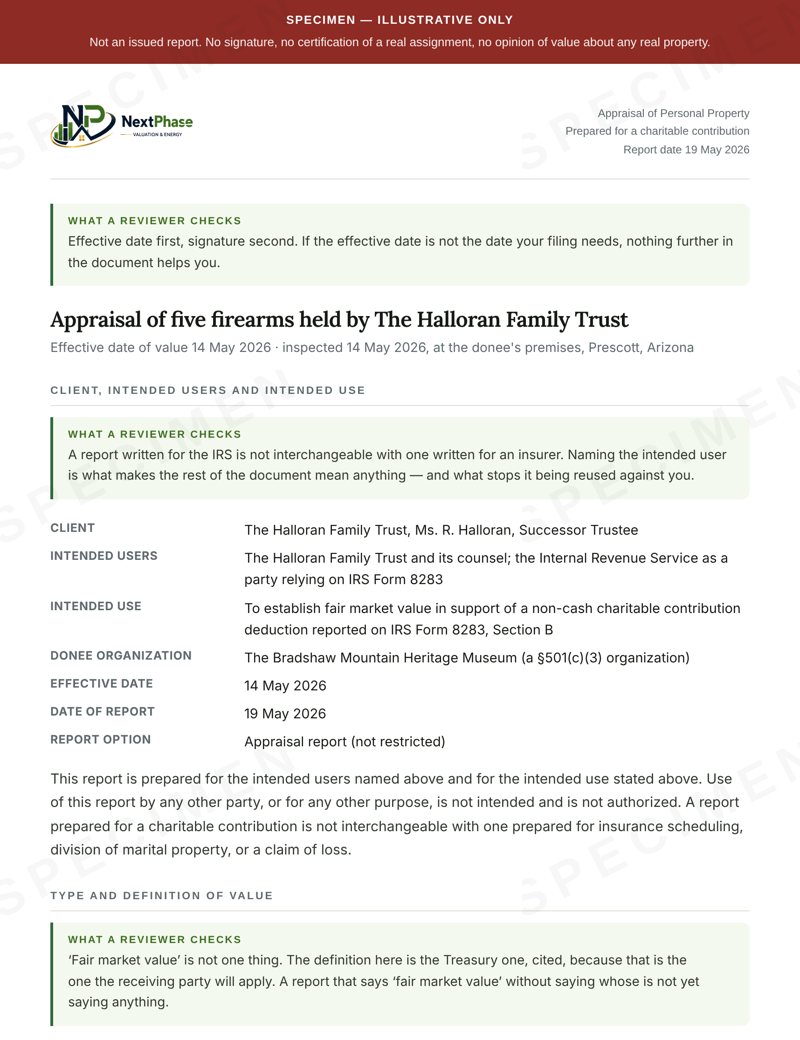
Estate work is almost always retrospective. The effective date of value is the date of death, or in some cases an alternate valuation date — not the date the appraiser was hired, which may be months or years later.
This is a research problem before it is a valuation problem. The appraiser has to establish what the market looked like on that historical date, using evidence available as of that date, and must not use knowledge of what happened afterwards.
That last constraint is the one most commonly violated. If a collection appreciated sharply after the decedent’s death, that appreciation belongs to the heirs — it does not belong in the estate valuation. Reports that quietly incorporate hindsight are vulnerable on review.
Retrospective valuations are also routine in divorce where the parties have stipulated a valuation date, in insurance losses where value is measured immediately before the loss, and in tax matters tied to a specific event.

 A parent died. Do you need an appraisal of their belongings?
 Fair market value, replacement cost, and liquidation value
 What makes an appraisal “qualified” to the IRS?