

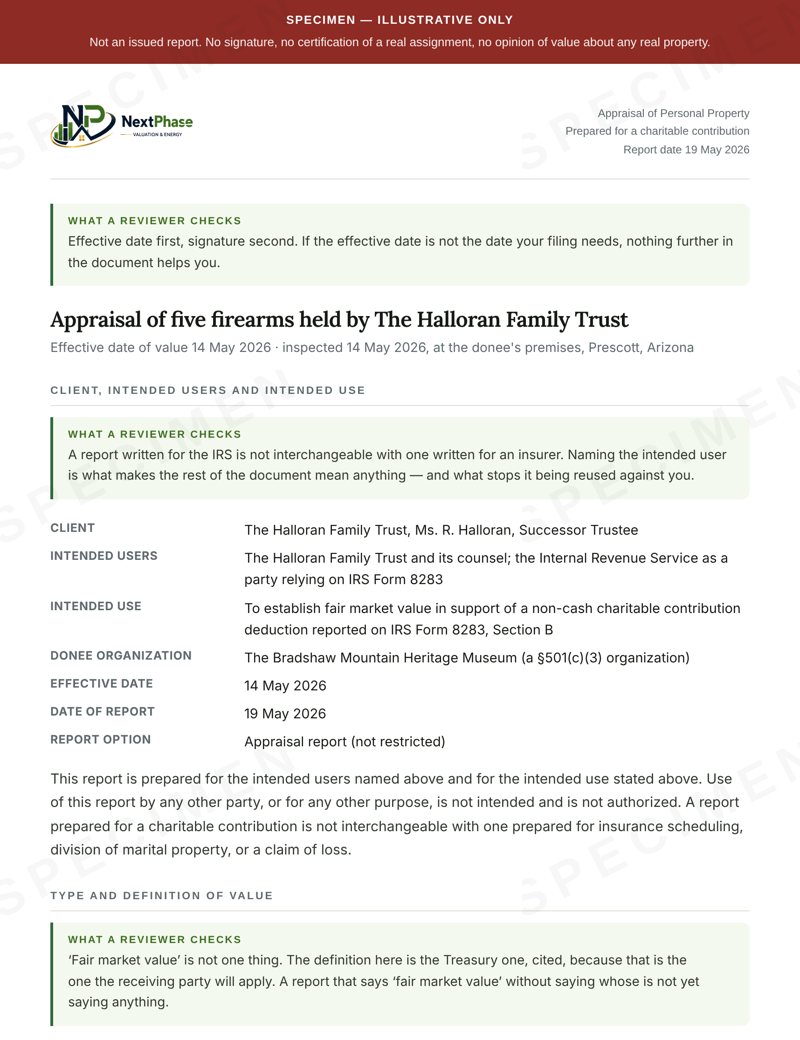
For noncash charitable contributions above the regulatory threshold, the IRS does not simply want a number — it requires a qualified appraisal prepared by a qualified appraiser. Both terms are defined in regulation, and both have to be satisfied.
A qualified appraisal must be prepared no earlier than 60 days before the date of contribution and no later than the due date of the return. It must contain a specific list of items: a description of the property, its physical condition, the date of contribution, the terms of any agreement relating to the property, the appraiser’s qualifications, the valuation method used, and the specific basis for the valuation.
A qualified appraiser must have earned an appraisal designation or met minimum education and experience requirements, regularly perform appraisals for compensation, and demonstrate verifiable education and experience in valuing the type of property at issue. The appraiser also signs a declaration on Form 8283.
Reports that fail on any one of these points have cost taxpayers the entire deduction — not a reduced one. The cost of a properly prepared appraisal is trivial against that exposure.

 What is USPAP, and why does everyone ask for it?
 Donating furniture, appliances, or remodel items worth over $5,000