

The single most common defect we see in appraisals prepared elsewhere is the wrong value premise. The asset is identified correctly, the research is adequate, and the conclusion is still unusable because it answers the wrong question.
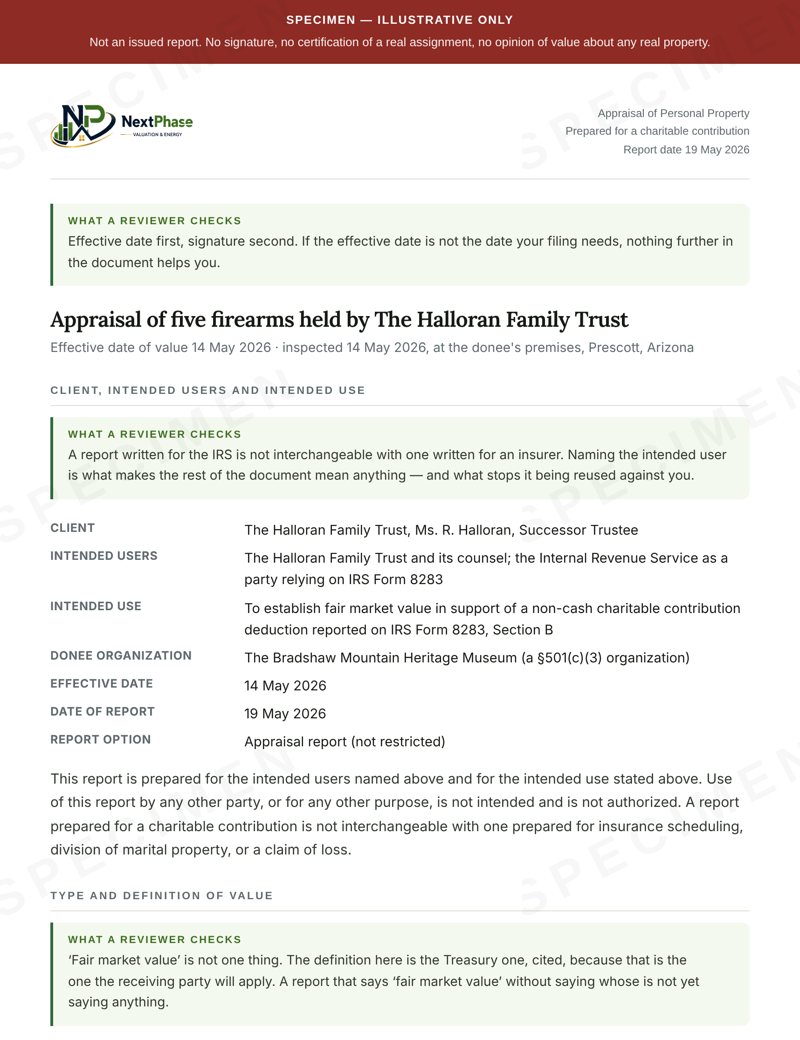
Fair market value is the price at which property would change hands between a willing buyer and a willing seller, neither under compulsion, both reasonably informed. It is the premise for estate, gift, charitable donation, and most divorce work.
Replacement cost is what it would cost to replace the item with one of like kind and quality, typically at retail. It is the premise for most insurance scheduling — and it is normally the highest of the three.
Orderly liquidation value assumes a reasonable period to find buyers. Forced liquidation value assumes a compressed, often auction, timeline. Both are common in lending, bankruptcy, and business dissolution, and both sit well below fair market value.
Because the spread between these premises can exceed fifty percent on the same asset, intended use is the first question asked on every NextPhase engagement, not an afterthought.

 Thinking of selling your small business? How to know what it is worth
 What is USPAP, and why does everyone ask for it?