

Executors and trustees are frequently surprised by how early an appraisal is needed. Estate tax filing deadlines, distribution to beneficiaries, and any sale of estate property all depend on a defensible date-of-death value.
The effective date is the date of death or, where elected, an alternate valuation date. Because the appraiser is looking backwards, delay does not make the assignment harder in principle — but property that has been emptied, sold, or altered in the interim does, because the evidence disappears.
The practical advice is simple: photograph and inventory before anything is distributed or discarded. Contents can be appraised from good documentation months later. They cannot be appraised at all once they are gone.
For an estate holding a house, a vehicle collection, firearms, a shop full of tools, and a business interest, a single engagement across those asset classes produces one coherent set of values with one effective date — rather than five separate reports that each assume something different.

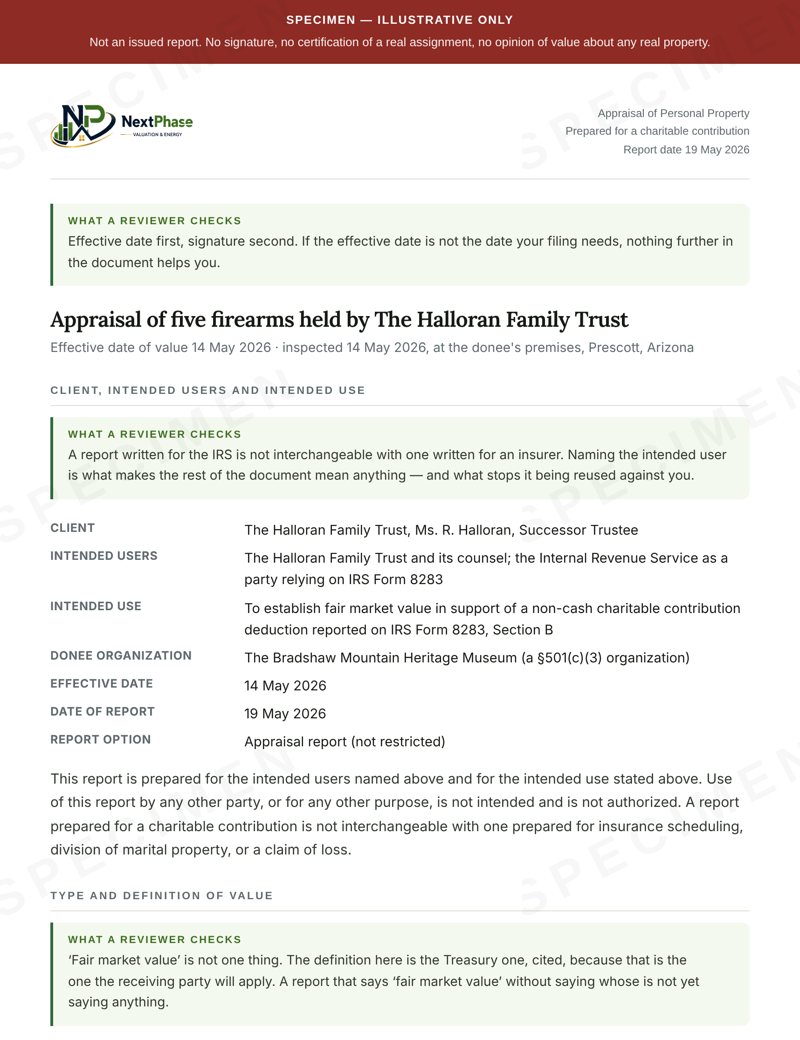
 A parent died. Do you need an appraisal of their belongings?
 Retrospective and date-of-death valuations
 Inherited a tractor, trailer or farm equipment? What to do first